
Why AI Projects Fail After Launch (And How Continuous Optimization Prevents It)
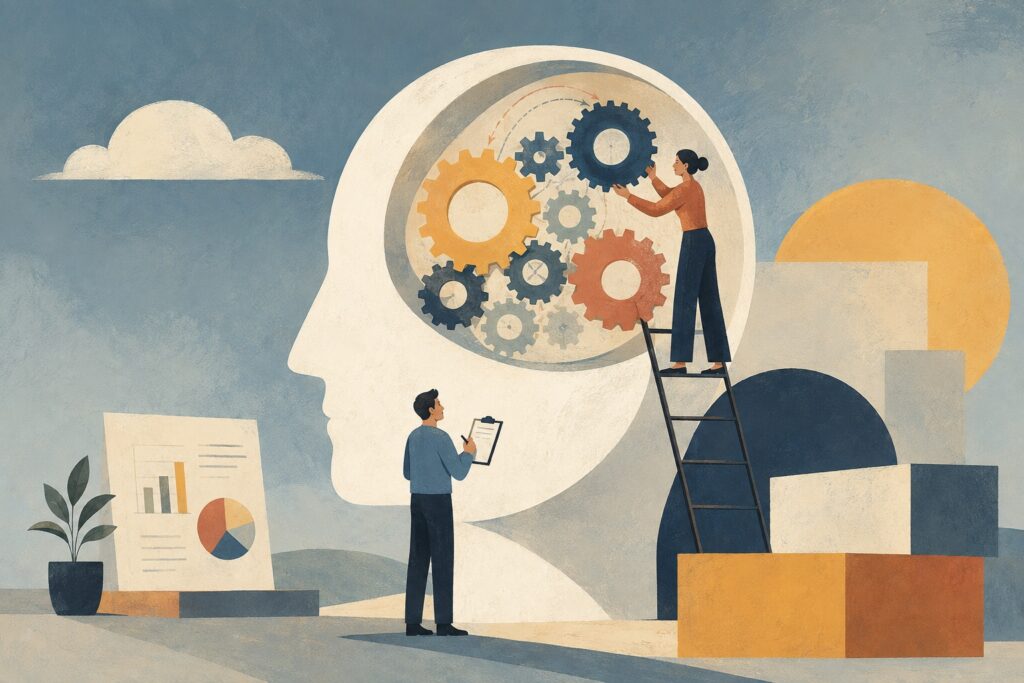
Getting AI into production is hard. Keeping it useful is harder.
An AI system can perform perfectly on launch day and still become slower, more expensive, and less accurate over time. Data shifts. User behavior changes. Models evolve. Workflows get more complex.
That’s why deployment isn’t the finish line—it’s the beginning of AI operations.
In this article, we’ll break down why AI projects often struggle after launch and how continuous optimization keeps performance, costs, and business value on track.
Why AI Projects Fail After a Successful Launch
A successful launch proves that an AI system can work. It doesn’t prove that it will keep working at the same level six months from now.
AI systems operate in environments that constantly change. Data shifts, users behave in unexpected ways, business processes evolve, and usage scales. At the same time, small inefficiencies that seemed insignificant during testing can become expensive problems in production.
Here are the most common reasons AI performance starts to decline after launch:
Model and Data Drift
AI systems are built and evaluated using data that represents a specific point in time. But the real world doesn’t stay still.
Customer behavior changes. New products appear. Internal terminology evolves. Market conditions shift. As production data moves further away from the data an AI system was originally tested against, its outputs can gradually become less accurate or relevant.
The dangerous part is that drift rarely looks like a system failure. The AI may continue responding normally while the quality of those responses slowly deteriorates.
AI Quality Degrades Quietly
Traditional software failures are often obvious: an application crashes, an API returns an error, or a service goes offline.
AI failures can be much harder to detect.
The system is technically available, but hallucinations increase. An agent completes a workflow but makes the wrong decision. A chatbot gives an answer that sounds convincing but misses important context.
100% uptime doesn’t mean 100% AI quality.
Without continuous evaluation of production outputs, these problems can remain invisible until users start reporting them.
Costs Grow Faster Than Expected
An AI workflow that looks cost-efficient during a pilot can behave very differently at production scale.
Long prompts, oversized context windows, unnecessary model calls, repeated agent actions, retries, and using expensive models for simple tasks can quickly increase AI costs.
The problem isn’t necessarily growing usage. It’s growing usage without continuously improving how efficiently that usage is handled.
AI Workflows Become More Complex
Many AI applications don’t stay simple for long.
A single-model implementation can gradually expand into a system involving multiple models, AI agents, retrieval pipelines, databases, APIs, and external tools.
Every additional component creates another potential failure point. And because these components depend on each other, a small issue in retrieval or an external API can reduce the quality of the entire AI workflow.
As complexity increases, observability becomes just as important as capability.
The Business Changes, but the AI Doesn't
Your AI system isn’t operating in a vacuum.
Companies introduce new products, update policies, restructure workflows, enter new markets, and change how teams work. If the AI system isn’t updated alongside those changes, it can continue performing exactly as designed—and still deliver the wrong business outcome.
That’s why post-launch optimization isn’t only about improving the model. It’s about keeping the entire AI system aligned with the business it supports.
Teams Lose Visibility After Deployment
One of the biggest post-launch risks is surprisingly simple: nobody really knows what the AI is doing in production.
Teams may track infrastructure uptime and API errors without monitoring output quality, agent behavior, model usage, cost per task, or emerging failure patterns.
By the time a problem becomes obvious, it may already have affected hundreds or thousands of interactions.
The Real Problem: Treating AI Like Traditional Software
Many post-launch AI problems come from one fundamental mistake: companies operate AI systems as if they were traditional software.
With conventional software, behavior is largely deterministic. If the code doesn’t change and the infrastructure is healthy, you can generally expect the same input to produce the same result. Monitoring uptime, errors, latency, and infrastructure health therefore provides a strong picture of whether the system is working.
AI changes that equation.
AI systems are probabilistic and highly dependent on their surrounding environment. Their performance can shift because of changing data, user behavior, prompts, retrieval sources, third-party models, or business requirements—even when nobody has touched the underlying application code.
| Traditional Software | AI Systems |
|---|---|
| Behavior is largely deterministic | Outputs are probabilistic |
| Problems usually follow code or infrastructure changes | Quality can decline without code changes |
| Uptime and error rates reveal many failures | A system can be online and still produce poor outputs |
| Testing is concentrated before deployment | Evaluation must continue in production |
| Updates are usually deliberate | Models, data, and user behavior can change independently |
| Success means the system functions as designed | Success means outputs continue delivering the intended business result |
This makes traditional monitoring necessary, but no longer sufficient.
Knowing that an AI service has 99.9% uptime tells you almost nothing about whether its answers are accurate, its agents are completing tasks correctly, or its costs remain justified by the value it creates.
Production AI therefore requires a different operating model—one built around continuous evaluation, monitoring, and optimization.
The question after deployment shouldn’t simply be “Is the system running?”
It should be “Is the system still delivering the quality, efficiency, and business outcomes we built it for?”
What Continuous AI Optimization Actually Means
Continuous AI optimization is the ongoing process of monitoring, evaluating, and improving an AI system after it goes into production.
It recognizes that AI performance is never truly static. Models change, production data shifts, user behavior evolves, workflows become more complex, and business requirements move forward. An AI system that performed well at launch needs to adapt alongside all of them.
The process can be thought of as a continuous loop:
Observe → Evaluate → Diagnose → Optimize → Validate → Repeat
First, teams observe how the system behaves in real-world conditions. They evaluate whether outputs meet defined quality and business standards, diagnose the source of emerging problems, make targeted improvements, and validate that those changes actually produce better results.
Importantly, continuous optimization isn’t simply about making the model “smarter.” It means balancing three dimensions of production AI performance:
Quality
The first question is whether the AI is still doing its job well.
Teams should continuously evaluate metrics such as:
- Accuracy and relevance
- Task completion rates
- Hallucination and error rates
- Agent success rates
- User corrections and escalations
- Consistency of outputs
The right metrics will depend on the use case. A customer support agent, for example, may be evaluated on resolution quality and escalation rates, while a document-processing system might prioritize extraction accuracy.
Performance
Even high-quality AI isn’t particularly useful if users have to wait too long for it—or if workflows frequently break.
Operational optimization focuses on:
- Response latency
- System reliability
- Workflow completion rates
- Tool and API failures
- Tool and API failures
- Bottlenecks between system components
As AI architectures become more complex, monitoring the complete workflow becomes increasingly important. A model may be performing perfectly while a retrieval system, external API, or agent orchestration layer creates the actual problem.
Cost
AI performance also has to remain economically sustainable.
Production usage can expose inefficiencies that were difficult to see during a pilot. Continuous optimization helps teams track:
- Cost per request or completed task
- Token consumption
- Model usage
- Unnecessary model calls
- Retry rates
- Infrastructure utilization
This visibility makes it possible to identify where a smaller model, shorter context, better prompt, caching strategy, or simpler workflow could deliver the same result at a lower cost.
The goal isn’t to maximize any one metric in isolation. The cheapest AI system isn’t useful if its quality collapses, and the most capable model isn’t necessarily valuable if every task becomes unnecessarily expensive.
Continuous AI optimization is about finding—and maintaining—the right balance between quality, performance, cost, and business value as conditions change.
The Continuous Optimization Framework
Continuous optimization works best when it is treated as a repeatable operational process rather than a series of fixes whenever something goes wrong. The goal is to create a feedback loop that continuously turns production data into measurable improvements.
Here’s what that framework looks like in practice.
Step 1: Define Production Success Metrics
Before you can optimize an AI system, you need to define what “good” actually means.
Model accuracy alone is rarely enough. Production success should combine technical metrics with the outcomes the AI was introduced to achieve.
Depending on the use case, that might include task completion rate, response accuracy, resolution rate, latency, cost per task, escalation rate, time saved, or conversion.
The important part is establishing clear baselines. Without them, teams can see that metrics are changing without knowing whether the system is actually getting better or worse.
Step 2: Monitor AI Behavior in Production
Once the system is live, teams need visibility into what happens during real interactions—not just whether the infrastructure stays online.
That means monitoring elements such as prompts and outputs, model usage, agent decisions, tool calls, retrieval results, latency, errors, retries, and costs.
For multi-agent or multi-model systems, observability should cover the entire workflow. Otherwise, teams may know that something failed without being able to identify where or why.
Step 3: Continuously Evaluate Output Quality
Monitoring tells you what happened. Evaluation tells you whether it was good enough.
Production outputs should be evaluated against defined quality criteria using a combination of automated evaluations, regression tests, real production examples, and human review where the stakes justify it.
This is particularly important because AI failures aren’t always technical failures. A response can be generated successfully and still be inaccurate, irrelevant, unsafe, or inconsistent with business requirements.
Step 4: Diagnose the Root Cause
When performance declines, changing the model shouldn’t automatically be the first response.
A quality problem could originate from several layers:
- The model
- Prompt design
- Context or retrieval quality
- Outdated or incomplete data
- Agent orchestration
- External tools and APIs
- Changes in user behavior
- Changes in the underlying business process
Identifying the actual source of the problem prevents teams from spending more on a stronger model when the real issue might be a weak retrieval pipeline or an unnecessarily complicated workflow.
Step 5: Optimize the Right Layer
Once the root cause is clear, teams can make targeted improvements.
That could mean refining prompts, reducing context size, improving retrieval, changing model routing, simplifying agent workflows, introducing caching, removing unnecessary calls, or replacing a model for a particular task.
This is where continuous optimization can improve both quality and economics. Instead of simply adding more compute or moving to a more powerful model, teams optimize the specific component creating the bottleneck.
Step 6: Validate Before Rolling Out Changes
Every optimization introduces the possibility of a new tradeoff.
A cheaper model might reduce costs but lower accuracy. A larger context window might improve certain answers while increasing latency. A simplified workflow might run faster but perform worse on edge cases.
Changes should therefore be tested against the existing production baseline before being rolled out broadly.
The goal is to answer a simple question: Did this change improve the overall system—not just one isolated metric?
Step 7: Repeat
There is no permanent “optimized” state for a production AI system.
Models improve. Costs change. Data shifts. Users discover new ways of interacting with the system. Business requirements evolve.
That means the optimization cycle needs to continue:
Monitor → Evaluate → Diagnose → Improve → Validate → Monitor again.
When this becomes part of normal AI operations, organizations can catch degradation earlier, control costs as usage scales, and continuously improve the value their AI systems deliver—instead of waiting for performance problems to become business problems.
Common Post-Launch AI Mistakes
Even well-designed AI systems can lose value after deployment when teams make the wrong assumptions about how production AI should be managed. Most post-launch problems aren’t caused by one dramatic technical failure. They come from smaller operational mistakes that accumulate over time.
Here are some of the most common.
“It Passed Testing, So It’s Done”
Pre-launch testing proves that an AI system performs under a defined set of conditions. Production introduces something much less predictable: real users, real data, edge cases, and changing business requirements.
A strong evaluation score at launch should therefore be treated as a baseline—not a permanent guarantee of quality. Production performance needs to be continuously measured against that baseline.
Monitoring Infrastructure but Not AI Quality
Traditional monitoring focuses heavily on uptime, latency, errors, and infrastructure health. Those metrics remain important, but they don’t tell you whether an AI system is actually producing good results.
A system can have 99.9% uptime while generating increasingly irrelevant answers, making poor agent decisions, or requiring more human corrections.
Healthy infrastructure doesn’t automatically mean healthy AI.
Using the Most Powerful Model for Everything
More capable models can improve performance on complex tasks, but that doesn’t mean every request needs them.
Routing simple, repetitive tasks through the most expensive model can significantly increase operating costs without creating a meaningful quality improvement.
A better approach is to match model capability to task complexity, continuously evaluating whether smaller or more efficient models can achieve the required result.
Adding More Agents Instead of Fixing the Workflow
When an AI workflow underperforms, adding another agent can seem like an easy solution.
But more agents also mean more model calls, handoffs, latency, costs, and potential failure points. Sometimes the better optimization is removing unnecessary steps rather than adding intelligence to them.
Complexity should solve a measurable problem—not become the default architecture.
Waiting Until AI Costs Become a Problem
Many teams start optimizing only after their AI bill becomes uncomfortable.
By then, inefficient prompts, oversized context windows, unnecessary calls, expensive model choices, and retry-heavy workflows may already be deeply embedded in the system.
Cost optimization should happen alongside scaling. Monitoring cost per successful task makes it easier to catch inefficiencies before higher adoption multiplies them.
Having No Clear Owner After Launch
During implementation, AI projects usually have clear ownership. After deployment, responsibility can become fragmented between engineering, data, product, IT, and business teams.
When nobody owns production AI performance, important questions can fall through the cracks: Who monitors quality? Who investigates drift? Who controls costs? Who decides when a model or workflow needs to change?
Organizations need clear ownership of AI quality, reliability, security, cost, and continuous improvement after launch.
Ultimately, the biggest post-launch mistake is treating deployment as the moment an AI project becomes finished.
For production AI, launch should mark the transition from building the system to continuously operating and improving it.
How TurnKey AI Solutions Keeps AI Performing After Launch
At TurnKey AI Solutions, we don’t treat deployment as the end of an AI project. Going live is where real AI operations begin.
Our approach is designed around continuous visibility and improvement, helping companies keep AI systems reliable, secure, cost-efficient, and aligned with business goals as production conditions change.
Continuous Monitoring From Day One
We build monitoring into AI systems from the start rather than adding it after problems appear.
TurnKey provides visibility across models, agents, workflows, and infrastructure so teams can track performance, identify drift, detect failures, and understand how their AI systems behave under real-world conditions.
Continuous Quality Management
A system being available doesn’t mean it’s producing the right results.
We continuously evaluate AI behavior against defined quality standards and production outcomes. This helps identify declining accuracy, problematic outputs, changing user patterns, and other quality issues before they become widespread business problems.
Ongoing Cost Optimization
AI costs shouldn’t become a black box as adoption scales.
TurnKey monitors how resources are being used and identifies opportunities to improve efficiency across model selection, prompts, context, infrastructure, and workflow design. The objective isn’t simply to use cheaper models—it’s to achieve the best balance between cost and performance for each workload.
Model-Agnostic Architecture
The AI landscape changes quickly. Companies shouldn’t have to rebuild their systems every time a better model becomes available.
TurnKey’s model-agnostic approach makes it possible to evaluate and integrate different models based on performance, cost, security, and use-case requirements—reducing unnecessary vendor lock-in and keeping the architecture adaptable.
Security and Reliability as the System Evolves
AI security isn’t a one-time pre-launch checklist.
As workflows, models, integrations, and usage patterns change, new risks can emerge. TurnKey builds security into AI operations from day one, including monitoring, workload isolation, and prompt-injection protections, so safeguards evolve alongside the system.
Continuous Improvement Based on Production Data
The best source of information about an AI system is how it actually performs in production.
We use production insights to identify bottlenecks, improve prompts and retrieval, optimize workflows, refine model selection, and address emerging quality issues.
The result is a continuous operational cycle:
Deploy → Monitor → Measure → Optimize → Scale
With TurnKey AI Solutions, the goal isn’t simply to get AI into production. It’s to make sure the system becomes more reliable, efficient, and valuable as your business and AI usage grow.
We know how to make your AI efforts cost-effective
FAQs
AI projects often struggle after launch because production conditions continuously change. Data and user behavior shift, workflows become more complex, costs increase with scale, and AI quality can degrade without causing obvious technical errors. Without continuous monitoring and optimization, these issues can accumulate until the system no longer delivers the expected business value.
There is no universal schedule. High-impact production AI systems should be monitored continuously, with optimization triggered by changes in quality, cost, latency, user behavior, or business requirements. Regular evaluations can also help identify gradual problems such as model drift or declining task success before they significantly affect users.
AI monitoring provides visibility into what is happening—such as changes in output quality, latency, costs, errors, or agent behavior. AI optimization uses those insights to improve the system, whether through prompt refinement, model selection, retrieval improvements, workflow changes, or infrastructure optimization. Monitoring identifies the problem; optimization turns that information into better performance.
TurnKey Staffing provides information for general guidance only and does not offer legal, tax, or accounting advice. We encourage you to consult with professional advisors before making any decision or taking any action that may affect your business or legal rights.
Tailor made solutions built around your needs
Get handpicked, hyper talented developers that are always a perfect fit.
Let’s talkPlease rate this article to help our team improve our content.
Here are recent articles about other exciting tech topics!


AI Agent Monitoring: Why AI Systems Need Continuous Quality Management
AI Workflow Automation: How to Identify the Right Processes First

AI Cost Optimization: How to Reduce Enterprise AI Costs Without Sacrificing Performance

What Is AI Agent Orchestration? Building Reliable Multi-Agent Workflows